A US-based enablement leader I worked with rolled out a new discovery motion to the entire global org on a Monday. Beautiful build. Nine weeks of work. Certification, drills, manager scorecard, the whole thing. She recorded a kickoff video, pushed the content to the LMS in three languages, and put a Slack message in every regional channel with the same subject line. She was proud of it. She should have been. The US version was working. Meetings booked per rep up 22 percent inside a month. Real behavior change on Gong calls. The kind of number a CRO puts in a board deck.
By Friday, EMEA was quietly refusing to use it. APAC had asked, through their regional director, whether it was mandatory. The LATAM team was running it but the calls sounded exactly like they did before. Nothing was technically wrong. Nobody was openly complaining. The content had shipped. The certification was being completed. On the dashboard, the rollout looked fine. On the calls, nothing had changed anywhere outside North America.
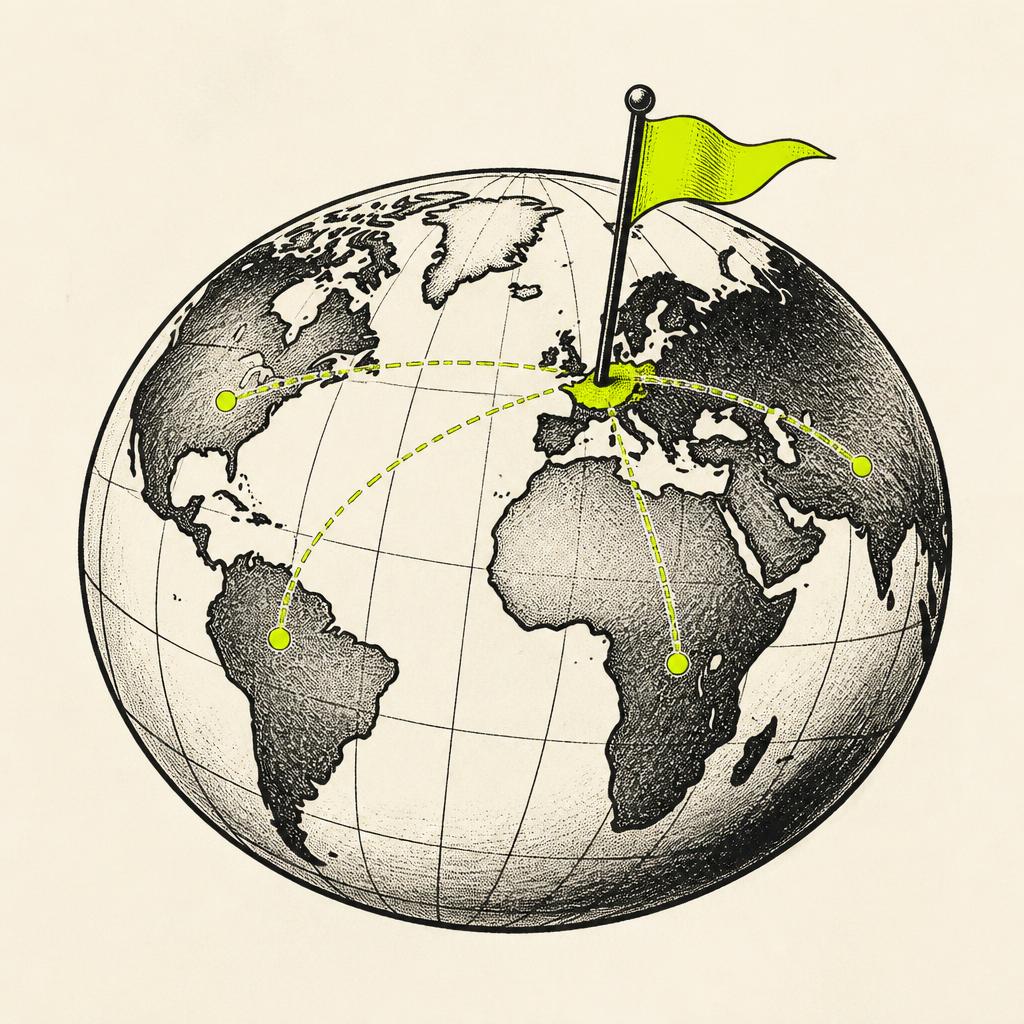
This is the story every global enablement leader has lived or is about to. It is not a translation problem. The content was translated. It is not a change management problem. Change management was run. It is a much older problem, which is that a discovery motion built in Boston assumes a buyer who behaves like a Boston buyer, and there are approximately zero Boston buyers in Tokyo, Frankfurt, or Sao Paulo. When you ship the US version everywhere, what you are actually shipping is a set of unspoken cultural assumptions dressed up as a framework, and the regions that do not share those assumptions will politely comply on the dashboard and quietly ignore it on the call.
There is a way to do this. It is not harder than what you are already doing. It is a different shape. Pilot before scale. Adapt before translate. Coach the regional manager before you coach the rep. And build a governance layer that keeps quality high when you are twelve time zones away and cannot see the calls happening in real time. That is the whole playbook. The rest of this post is the exact motion.
"Localization is not translation. It is the difference between shipping content in another language and shipping a motion that actually works in another market."
Six Regional Adjustments Nobody Tells You About
Before you rebuild your rollout process, know what you are actually adjusting for. These are the six that break US enablement in the field. Every one of them is invisible on a slide and obvious the first time a rep in the region tries to run the motion on a real buyer.
There are more. Language of urgency, decision-maker mapping norms, the role of consensus, how objections get raised or hidden, how much the org chart is a suggestion versus a wall. But if you get those six right, you are already ahead of ninety percent of global enablement rollouts, because most of them do not even acknowledge that these are real. They treat the US motion as the motion and everything else as a translation problem.
Pilot Before Scale. This Is The Whole Move.
The single biggest mistake in global enablement is shipping to all regions on the same day. Not because it is logistically hard. Because it does not give you the signal you need to adjust before you have already trained the wrong version into six markets. The pilot-then-scale motion is small enough to fit on one page and it is the difference between a rollout that lands and a rollout that shows up in the LMS and nowhere else.
The whole thing is roughly a quarter. That is faster than the botched rollout you are already running, because the botched rollout keeps requiring rework in every region for the next year while everyone quietly pretends it is fine. The pilot-then-scale version is more effort in weeks one through ten and dramatically less effort in months four through twelve, and it produces behavior change instead of certification completion.
"Central enablement holds the doctrine and the rubric. The region owns the pacing, the proof, and the coaching tone. If you invert those, the motion dies on impact in every region that is not the source."
The Governance Layer
The part nobody writes about, because it is not glamorous, is the operating rhythm that keeps quality high after you have scaled. Without it, every region drifts. Six months in, you have six different motions with the same name, no comparability across regions on the dashboard, and no way to tell whether a rollout worked because you cannot compare like to like.
The governance layer is three things. A monthly regional call with every regional manager where you review Gong calls against the same rubric. A quarterly doctrine review where the central team decides what is a real regional adjustment versus drift and updates the playbook accordingly. And a single owned metric per region that is the same metric across regions, so you can actually see who is running the motion and who is running a story about the motion. Meetings booked per rep works. Discovery-to-Stage-2 conversion works. Anything downstream of Apply-level behavior works. Certification completion does not, because it does not tell you whether the call sounded different this month than last month.
The rollout governance checklist
Run this monthly. If any box is unchecked, that is where the rollout is failing.
Same rubric, every region, every month.
The rubric is the constant. Not the content, not the drills, the rubric. If London and Tokyo are being graded on different Apply behaviors, you cannot tell whether either region is running the motion. Central enablement owns the rubric. Regions own everything else.
One shared metric, tracked publicly, per region.
Pick the metric that is downstream of Apply-level behavior. Meetings booked per rep, or discovery-to-Stage-2. Publish it monthly by region. Not to shame anyone. To make drift visible. When a region silently reverts to the old motion, this number is where you see it first.
Monthly regional call review. Together. Same rubric.
Central enablement lead plus every regional manager. Two Gong calls per region. Graded live against the shared rubric. The point is not to catch anyone. The point is calibration. Six months in, this call is the reason your rollout has not drifted into six different motions with the same name.
Quarterly doctrine review. What is adjustment, what is drift.
Every quarter, the central team and the regional managers review the deviations that have emerged. Some are real regional adjustments and get added to the playbook. Some are drift and get corrected. Without this review, everything gets called an adjustment and the doctrine erodes. With it, the playbook stays sharp and the regions stay aligned.
One regional manager owns the rollout in region. Not IT. Not ops.
The regional manager is accountable for the motion running in region. Not for creating content, not for translating it, for making sure their reps actually run it on calls. If nobody in region owns it, nobody in region runs it. This is the single most under-invested role in global enablement.
What This Looks Like When It Works
The end state is not that every region runs an identical motion. That is the failure mode you are trying to avoid. The end state is that every region runs the same doctrine, the same rubric, the same core discovery shape, and the same governance rhythm, and everything downstream of that is calibrated for the market. A Gong call in Tokyo does not sound like a Gong call in Austin. It should not. But both calls, graded against the same rubric, should show the same Apply-level behaviors: buyer named the current state in their own words, buyer named the desired state in their own words, buyer described the impact of the gap. The words are different. The shape is the same.
That is what portable enablement actually means. Not one motion, one shape. Not one script, one rubric. Not one cadence, one governance rhythm. When you get this right, a new regional launch is a four-week motion instead of a nine-month one. When you get this wrong, you are the enablement leader whose beautiful rollout is quietly ignored in every region that is not the source, and you find out about it eight months later when the CRO asks why the pipeline number in EMEA has not moved.
"One motion, one shape. The words are different in every region. The rubric is the same everywhere. That is what portable enablement actually means."
The download below is the rollout checklist as a printable page. Pilot regions, week-by-week timeline, governance checklist, and the six regional adjustments. Print it, mark it up, hand it to your regional managers. That is the point.
Keep going
Read next
Everyone Passed the Training. Nothing Changed.
The doctrine underneath the rollout. Why Apply-level behavior is the only thing worth grading a global motion against, and the one question to ask before the next build.
Manifesto
How I Run a BDR Org. The Operating System.
The nine principles that keep quality high across regions when you cannot be in every room. The doctrine layer that sits above the rollout.
Outbound, But Smarter
The Modern BDR Operator
Get the next one in your inbox.
New frameworks, hot takes, and playbooks. Written for operators, not audiences.
Subscribe to Booked.